
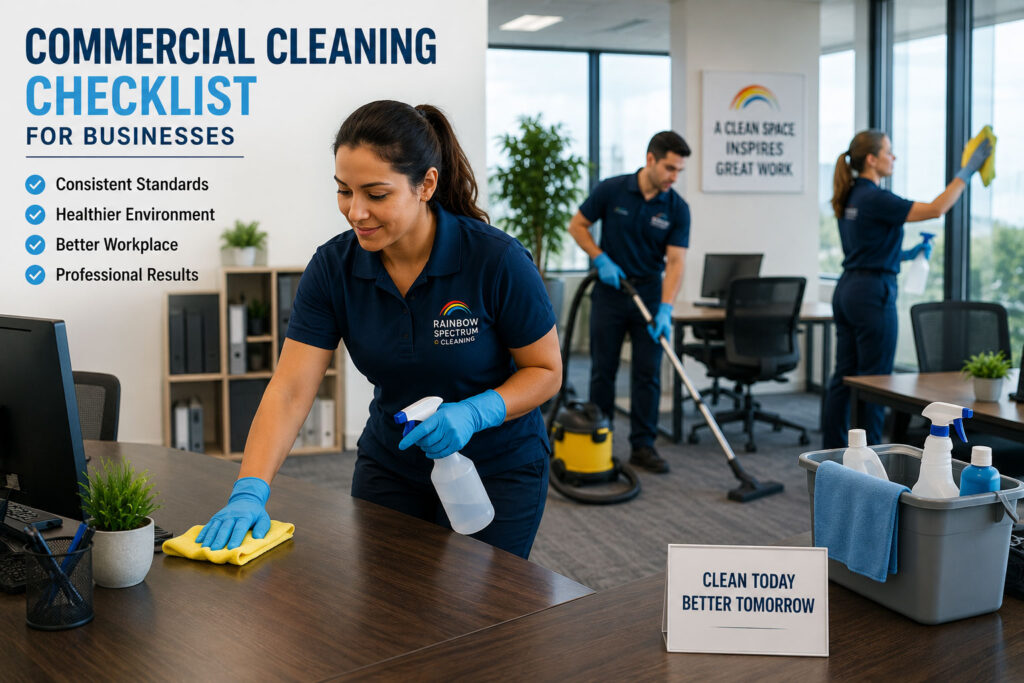
A commercial cleaning checklist helps businesses maintain consistent standards, reduce missed tasks, and determine which areas need daily attention versus periodic deep cleaning. The right checklist should be based on the type of facility, foot traffic, operating hours, number of employees or visitors, and the surfaces throughout the building.
For most businesses, an effective cleaning plan includes a combination of routine janitorial tasks and periodic commercial deep cleaning.
This checklist can be used by offices, schools, hotels, restaurants, churches, country clubs, municipal facilities, medical offices, and other commercial properties throughout South Florida.
For a broader understanding of professional facility maintenance, see our Ultimate Guide to Commercial Cleaning Services in South Florida. If you are still determining the difference between routine and specialized cleaning, see Commercial Cleaning vs. Janitorial Services: What’s the Difference?
Why Businesses Need a Commercial Cleaning Checklist
Commercial buildings contain multiple areas with different cleaning requirements.
An entrance may need attention several times a day, while high dusting may only be required periodically. Restrooms may require daily or multiple daily cleanings, while carpet extraction may be scheduled monthly, quarterly, or according to traffic.
Without a defined checklist, cleaning can become inconsistent.
A commercial cleaning checklist helps establish:
- Which areas need to be cleaned
- What tasks should be completed
- How often each task should be performed
- Which jobs require periodic deep cleaning
- Which high-traffic areas need additional attention
- Which tasks should be inspected after completion
The checklist also creates a clearer scope of work between a business and its commercial cleaning company.
Instead of simply requesting that a facility be “cleaned,” the business can define what cleaning actually means for its property.
For businesses that want a better understanding of the overall service, see What Is Commercial Cleaning?
Daily Commercial Cleaning Checklist
Daily cleaning focuses primarily on areas that receive frequent use.
The exact tasks depend on the facility, but a typical daily checklist may include the following.
Entrances and Reception Areas
Entrances create one of the first impressions visitors have of a business.
Daily entrance cleaning may include:
- Vacuum or sweep entrance flooring
- Mop hard floors as needed
- Remove visible dirt, sand, and debris
- Clean entrance glass and doors
- Wipe door handles
- Clean reception counters
- Empty trash
- Straighten reception and waiting areas
- Remove fingerprints from glass surfaces
- Check entrance mats
In South Florida, entrance areas may need additional attention because rain, sand, grass, and outdoor debris can be tracked indoors throughout the year.
Offices and Work Areas
Routine office cleaning services commonly include:
- Empty trash and replace liners
- Vacuum carpets
- Sweep and mop hard floors
- Dust accessible surfaces
- Wipe common high-touch areas
- Clean conference room tables
- Straighten shared areas
- Remove visible debris
- Clean interior glass where needed
Individual desks and personal workspaces may require different cleaning procedures depending on the client’s preferences.
Restrooms
Commercial restrooms are among the most important areas to maintain consistently.
A daily restroom checklist may include:
- Clean and disinfect toilets
- Clean urinals
- Clean sinks and faucets
- Wipe countertops
- Clean mirrors
- Empty trash
- Replace liners
- Sweep and mop floors
- Wipe high-touch surfaces
- Refill soap
- Refill toilet paper
- Refill paper towels or hand-drying supplies
- Check for odors
- Inspect fixtures for visible buildup
High-traffic facilities may require restroom checks multiple times throughout the day rather than once.
Break Rooms and Employee Kitchens
Employee break rooms can accumulate crumbs, spills, trash, and food residue quickly.
Routine cleaning may include:
- Empty trash and recycling
- Wipe countertops
- Clean sinks
- Wipe tables
- Wipe appliance exteriors
- Sweep floors
- Mop floors
- Remove visible food debris
- Clean high-touch surfaces
The cleaning agreement should clearly establish whether cleaners are responsible for the inside of refrigerators, microwaves, cabinets, or other appliances.
Hallways and Common Areas
Common areas may require:
- Vacuuming
- Sweeping
- Mopping
- Trash removal
- Spot cleaning
- Dusting accessible surfaces
- Cleaning high-touch points
- Straightening furniture
- Removing visible debris
Facilities with heavy traffic may need these tasks completed more frequently.
Weekly Commercial Cleaning Checklist
Some areas need attention regularly but may not require detailed cleaning every day.
Weekly tasks can include:
- Detailed dusting
- Dusting window sills
- Cleaning interior glass
- Cleaning partitions
- Wiping baseboards where needed
- Spot cleaning walls and doors
- Detailed cleaning of break room surfaces
- Cleaning chair bases and furniture surfaces
- Vacuuming edges and corners
- Cleaning underneath accessible furniture
- Detailed restroom cleaning
- Inspecting entrance mats
- Cleaning low vents and accessible ledges
The weekly schedule should be adjusted based on facility use.
A busy hotel, school, restaurant, medical office, or country club may need some of these tasks completed daily rather than weekly.
Monthly Commercial Cleaning Checklist
Monthly cleaning can address areas that are not typically handled during every janitorial visit.
Tasks may include:
- Detailed baseboard cleaning
- Dusting higher surfaces
- Detailed interior glass cleaning
- Cleaning doors and frames
- Cleaning difficult-to-reach corners
- Spot cleaning carpets
- Detailed floor inspection
- Cleaning vents within safe reach
- Detailed restroom cleaning
- Cleaning behind movable furniture
- Inspecting flooring for wear or buildup
- Evaluating carpet condition
This is also a good time for the cleaning provider or facility manager to identify areas that may require specialized attention.
For example, floors that are beginning to lose their finish may need polishing or restorative care. Heavily traveled carpeted areas may require extraction rather than routine vacuuming.
Quarterly and Seasonal Commercial Cleaning Checklist
Periodic commercial cleaning addresses deeper tasks that are not typically part of routine janitorial maintenance.
Depending on the facility, quarterly or seasonal cleaning may include:
- Carpet extraction
- Floor polishing
- Floor stripping and waxing
- High dusting
- Detailed window cleaning
- Deep restroom cleaning
- Cleaning elevated ledges
- Detailed cleaning of common areas
- Deep cleaning entrances
- Cleaning difficult-to-reach surfaces
- Detailed floor maintenance
- Cleaning after major events or busy seasons
The timing should reflect how quickly surfaces become worn or soiled.
A commercial property with constant public traffic may require some deep-cleaning services more frequently than a low-traffic professional office.
For more information about determining frequency, see How Often Should Commercial Buildings Be Cleaned?
Commercial Cleaning Checklist by Area
Businesses can also organize cleaning based on the area rather than the schedule.
| Area | Common Cleaning Tasks |
|---|---|
| Entrance | Sweep, vacuum, mop, clean glass, wipe doors, remove debris |
| Reception | Dust, vacuum, clean counters, empty trash, clean glass |
| Offices | Trash removal, vacuuming, dusting, floor cleaning |
| Conference Rooms | Clean tables, vacuum, dust, empty trash |
| Restrooms | Toilets, sinks, mirrors, floors, trash, supply restocking |
| Break Rooms | Counters, sinks, tables, floors, trash |
| Hallways | Vacuuming, sweeping, mopping, spot cleaning |
| Stairs | Sweep or vacuum, clean handrails, mop where applicable |
| Elevators | Floor cleaning, buttons, doors, interior surfaces |
| Common Areas | Floors, furniture surfaces, trash, high-touch points |
| Carpets | Vacuuming, spot cleaning, periodic extraction |
| Hard Floors | Sweeping, mopping, scrubbing, polishing as needed |
| Windows/Glass | Fingerprint removal, interior glass, periodic full cleaning |
A checklist like this can then be converted into a daily, weekly, monthly, and quarterly schedule.
Floor Cleaning Checklist
Commercial flooring often represents one of the largest areas of a building and can require several different types of maintenance.
Carpeted Floors
Routine carpet maintenance may include:
- Vacuum high-traffic areas
- Vacuum edges
- Remove visible debris
- Spot clean stains
- Inspect entrances and walkways
Periodic maintenance may include:
- Carpet extraction
- Deep spot treatment
- Cleaning traffic lanes
- Evaluating worn areas
Hard Floors
Routine hard-floor cleaning may include:
- Sweeping
- Dust mopping
- Damp mopping
- Removing spills
- Cleaning corners and edges
Periodic services may include:
- Machine scrubbing
- Polishing
- Burnishing
- Stripping and waxing
- Other restorative floor care
The correct process depends on the flooring material and finish.
High-Touch Surface Cleaning Checklist
Frequently touched surfaces can benefit from regular cleaning, particularly in busy workplaces and public facilities.
These may include:
- Door handles
- Push plates
- Elevator buttons
- Light switches
- Handrails
- Reception counters
- Shared tables
- Break room surfaces
- Restroom fixtures
- Shared equipment surfaces
The appropriate frequency depends on the level of traffic and the type of facility.
Schools, hotels, restaurants, medical offices, municipal buildings, and other high-use properties may need more frequent attention than smaller offices.
Industry-Specific Cleaning Checklist Considerations
A commercial cleaning checklist should not be identical for every business.
Office Buildings
An Office Cleaning checklist may emphasize:
- Work areas
- Conference rooms
- Break rooms
- Restrooms
- Reception areas
- Carpet and floor maintenance
Schools
A School Cleaning checklist may focus heavily on:
- Classrooms
- Hallways
- Restrooms
- Administrative areas
- Cafeterias
- High-traffic floors
- Seasonal deep cleaning
Hotels
A Hotel Cleaning program may place additional emphasis on:
- Entrances
- Lobbies
- Common areas
- Public restrooms
- Corridors
- Meeting spaces
- Floor and glass appearance
Restaurants
A Restaurant Cleaning checklist may need to account for:
- Dining areas
- Entrances
- Restrooms
- Employee areas
- Floors
- Frequently touched surfaces
- High customer turnover
Churches
A Church Cleaning schedule may change according to:
- Weekly services
- Weddings
- Funerals
- Holiday services
- Meetings
- Community events
Country Clubs
A Country Club Cleaning checklist may include:
- Member areas
- Dining spaces
- Event rooms
- Restrooms
- Entrances
- Offices
- Common areas
- High-visibility floors and glass
Municipal Buildings
A Municipal Cleaning program may focus on offices, public counters, meeting rooms, hallways, restrooms, waiting areas, and other spaces receiving daily public traffic.
South Florida Commercial Cleaning Checklist Considerations
Businesses in South Florida may need to adjust cleaning schedules because of local environmental conditions.
Rain and Moisture
Frequent rainfall can increase the amount of moisture and debris tracked through entrances.
Entry floors and mats may need more frequent inspection and cleaning during rainy periods.
Sand and Outdoor Debris
Sand and outdoor particles can accumulate quickly near entrances and high-traffic walkways.
Routine vacuuming and floor maintenance can help control this buildup.
High Year-Round Traffic
Many South Florida commercial facilities operate continuously throughout the year.
Hotels, restaurants, medical offices, country clubs, municipal buildings, offices, and other properties may experience sustained traffic rather than long periods of low use.
Seasonal Activity
Tourism and seasonal residents can increase traffic for some businesses during certain times of the year.
Cleaning schedules can be adjusted when occupancy or visitor traffic increases.
Storm and Post-Construction Cleanup
Storm preparation, repairs, renovations, and construction projects can create cleaning needs outside the normal maintenance schedule.
Facilities undergoing renovation may require Post-Construction Cleaning before reopening renovated spaces.
How to Build a Cleaning Schedule From the Checklist
A checklist becomes most useful when each task is assigned a frequency.
A simple cleaning plan can be organized like this:
| Frequency | Typical Tasks |
|---|---|
| Daily | Trash, restrooms, floors, break rooms, entrances |
| Several Times Per Week | Vacuuming, mopping, dusting, common areas |
| Weekly | Detailed dusting, glass, edges, low ledges |
| Monthly | Detail cleaning, carpet spots, floor inspection |
| Quarterly | Carpet extraction, high dusting, floor polishing |
| Seasonal/As Needed | Floor restoration, post-construction cleaning, major deep cleaning |
The exact schedule should be customized.
A facility with hundreds of daily visitors may need substantially more cleaning than an office with a small staff.
That is why a commercial cleaning checklist should be considered a starting framework rather than a universal schedule.
Should You Use a Professional Commercial Cleaning Company?
A checklist can help a business understand what needs to be done, but completing and managing the work consistently can be another challenge.
A professional commercial cleaning company can build a scope of work around the facility and assign cleaning frequencies based on actual use.
This can include both:
Routine janitorial maintenance
and
Periodic commercial deep cleaning
Using the same provider for both can make it easier to coordinate recurring cleaning with floor care, carpet cleaning, high dusting, window cleaning, and other larger projects.
For more information, see Benefits of Hiring a Commercial Cleaning Company.
Frequently Asked Questions About Commercial Cleaning Checklists
What should be included in a commercial cleaning checklist?
A commercial cleaning checklist should identify each area of the facility, the tasks required in that area, and how often those tasks should be performed. Common categories include entrances, offices, restrooms, break rooms, common areas, floors, carpets, glass, trash removal, high-touch surfaces, and periodic deep-cleaning projects.
How often should an office be professionally cleaned?
The right frequency depends on the number of employees, visitors, business hours, facility size, restrooms, flooring, and overall traffic. Some offices benefit from daily cleaning, while others may require service several times per week. Deep-cleaning tasks such as carpet extraction or floor maintenance are generally scheduled separately based on condition and use.
What commercial cleaning tasks should be done daily?
Daily tasks commonly include trash removal, restroom cleaning, vacuuming or sweeping, mopping where needed, cleaning break rooms, maintaining entrances, and addressing frequently touched surfaces. High-traffic facilities may require certain tasks, especially restroom and entrance cleaning, more than once per day.
What cleaning tasks should be performed monthly or quarterly?
Monthly or quarterly commercial cleaning may include detailed floor care, carpet cleaning, high dusting, window cleaning, baseboard cleaning, detailed restroom cleaning, and other deeper tasks. The appropriate frequency depends on traffic, building conditions, flooring, and the type of business.
Should every business use the same cleaning checklist?
No. A commercial cleaning checklist should be customized to the property. An office, school, hotel, restaurant, church, medical office, country club, and municipal facility all have different traffic patterns and cleaning priorities. The checklist should reflect how the building is actually used.
Who should be responsible for maintaining the commercial cleaning checklist?
Responsibility may fall to a facility manager, property manager, office manager, operations manager, or professional cleaning provider. When a commercial cleaning company is used, the checklist can become part of the scope of work so both the business and cleaning provider understand which tasks are expected and how often they should be completed.
Does a commercial cleaning checklist include deep cleaning?
It should. A complete checklist should distinguish between routine janitorial tasks and periodic deep-cleaning services. Daily maintenance may include trash, vacuuming, mopping, and restroom cleaning, while periodic work may include carpet extraction, high dusting, floor stripping and waxing, window cleaning, and other specialized services.
How can I create a cleaning checklist for my specific facility?
Start by walking through the entire property and listing each room or area. Identify what needs to be cleaned, how heavily the space is used, and how quickly it becomes dirty. Then assign each task a daily, weekly, monthly, quarterly, or as-needed frequency. A professional on-site assessment can help refine the schedule.
Create a Cleaning Checklist for Your South Florida Facility
A commercial cleaning checklist is most effective when it reflects the actual conditions of the property rather than relying on a generic schedule.
The appropriate program depends on factors such as facility size, business type, foot traffic, operating hours, number of restrooms, flooring, common areas, and seasonal activity.
Rainbow Spectrum Cleaning works with offices, schools, hotels, restaurants, churches, country clubs, municipal facilities, and other commercial properties throughout South Florida to develop customized cleaning programs.
If your business needs help determining what should be cleaned and how often, request a proposal. A facility walkthrough can help identify routine cleaning priorities, periodic deep-cleaning requirements, and an appropriate schedule for maintaining your property.